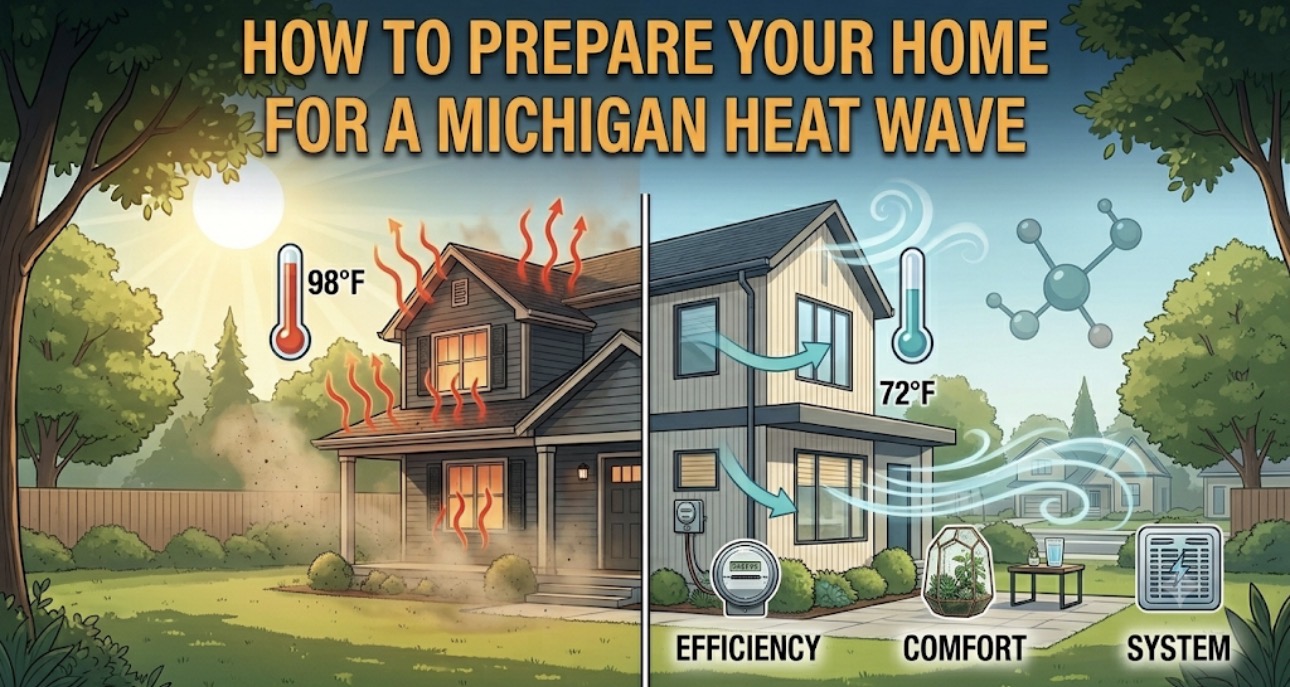
Southeast Michigan averages about two to four notable heat waves per summer periods of three or more consecutive days with high temperatures above 90 degrees and high humidity. By national standards, these aren't extreme. But Michigan homes, particularly older ones, often aren't well-equipped to handle sustained heat: insulation levels designed for winter performance, limited natural shading, and HVAC systems that may be running at reduced efficiency after sitting idle through spring.
The time to prepare isn't the day the forecast says 95 degrees. HVAC technicians and equipment suppliers get overwhelmed on the first hot day of the year. Filters sell out at home improvement stores. Portable AC units are backordered. Everything that could have been handled calmly in advance becomes a scramble.
Here's a practical preparation guide things to do before the heat arrives, while it's happening, and in terms of longer-term readiness.
Before a Heat Wave: Get the System Ready
Test Your AC Now, Not When You Need It
Turn your air conditioner on and run it for at least 30 minutes on a mild day. You're checking that it starts, produces cold air at the vents, and runs without unusual sounds or odors. If the system hasn't been used since last summer, this test gives you time to identify and address any issues before you're dependent on it.
Specific things to watch: Does the outdoor unit start within a few seconds of calling for cooling? Is the air at the supply vents noticeably cooler than room temperature after 15–20 minutes? If either of these isn't working as expected, schedule a service call while there's still scheduling availability.
Replace the Air Filter
A fresh filter maximizes airflow and system efficiency when the AC is working hardest. This is a $10–$25 investment that takes five minutes and meaningfully affects system performance. During extended heat events when the system runs nearly continuously, check it again after two weeks — high-demand periods consume filter capacity faster than normal operation.
Clear the Area Around the Outdoor Unit
The condenser unit needs clear airflow on all sides ideally at least two feet of clearance. Before a heat wave, check for overgrown vegetation, debris accumulated over winter and spring, or anything stored nearby that's reducing airflow. Rinse the condenser fins gently with a garden hose from the inside out if they're visibly clogged with debris or cottonwood.
Check and Seal Air Leaks
Every gap in your home's envelope lets hot outdoor air in and cool air out. Before temperatures climb, walk through the home and check door weatherstripping, window seals, and any obvious gaps around pipes, wires, or outlets on exterior walls. Replacing a worn door sweep takes 20 minutes and costs a few dollars. The impact during a heat wave is immediate and noticeable.
Managing Your Home During a Heat Wave
Pre-Cool Aggressively
Get ahead of the heat. If temperatures are forecast to peak in the afternoon, start cooling the home earlier in the morning when outdoor temperatures are lower and the AC works more efficiently. Dropping the indoor temperature to 70–72 degrees in the morning and then allowing it to drift upward slightly during peak afternoon heat is more efficient than trying to maintain a low setpoint continuously when the heat load is at its maximum.
Control Solar Heat Gain
Direct sunlight through windows is one of the most significant sources of heat gain in a home during a heat wave. Close blinds, shades, or curtains on south- and west-facing windows during the hottest parts of the day. This simple step can reduce solar heat gain by 40–77%, meaningfully reducing the work your AC has to do. Exterior shading awnings, exterior blinds, or a well-placed tree is even more effective because it stops solar radiation before it enters the glass.
Reduce Internal Heat Sources
Cooking, running the dishwasher, using the dryer, and even lighting generate heat that your AC then has to remove. During a heat wave, shifting these activities to early morning or evening hours reduces the indoor heat load during peak afternoon conditions. Grilling outside rather than cooking inside is both practical and noticeably effective.
Don't Ignore Humidity
Michigan heat waves typically come with high humidity, which makes the heat feel more severe and makes it harder for the body to cool itself. Run bathroom exhaust fans longer after showers, avoid leaving large pots of water boiling, and keep an eye on your indoor relative humidity if you have a monitor or smart thermostat that tracks it. Humidity above 60% indoors on a hot day creates conditions that are both uncomfortable and, for vulnerable individuals, can be a health concern.
Special Considerations for Older Homes
Michigan has a large stock of homes built before the 1970s, many with single-pane windows, limited attic insulation, and construction that allows significantly more air infiltration than modern homes. These homes are disproportionately affected by heat waves because the thermal buffer between inside and outside is thinner.
If your home fits this description, realistic expectations are important. A well-maintained AC in an older, less-insulated home may struggle to maintain 76 degrees indoors when it's 95 outside with high humidity not because the system is failing, but because the building envelope is limiting what's achievable. If this is a recurring problem, addressing insulation and air sealing is a more effective long-term solution than upsizing the HVAC equipment.
Know When to Check on Neighbors
Heat-related illness disproportionately affects elderly individuals, young children, and people with certain health conditions. Michigan heat waves have historically caused preventable deaths, largely among people living alone without functioning air conditioning. If you have elderly neighbors, particularly those living alone, checking in during a heat wave takes a few minutes and can genuinely matter.
The symptoms of heat exhaustion heavy sweating, weakness, cold or pale skin, weak pulse, nausea can progress to heat stroke, which is a medical emergency. Anyone showing confusion, loss of consciousness, or hot dry skin during a heat event needs emergency medical attention.
The Long-Term Approach
Reacting to heat waves every summer is manageable, but it's worth thinking about longer-term resilience. Annual AC maintenance before the cooling season, attic insulation improvements, window upgrades, and addressing duct leaks all reduce both the strain on your HVAC system during extreme heat and the energy cost of staying comfortable. These aren't glamorous investments, but they compound a home that's well-insulated, well-sealed, and running efficient, well-maintained equipment handles a heat wave with less drama and less cost than one that isn't.