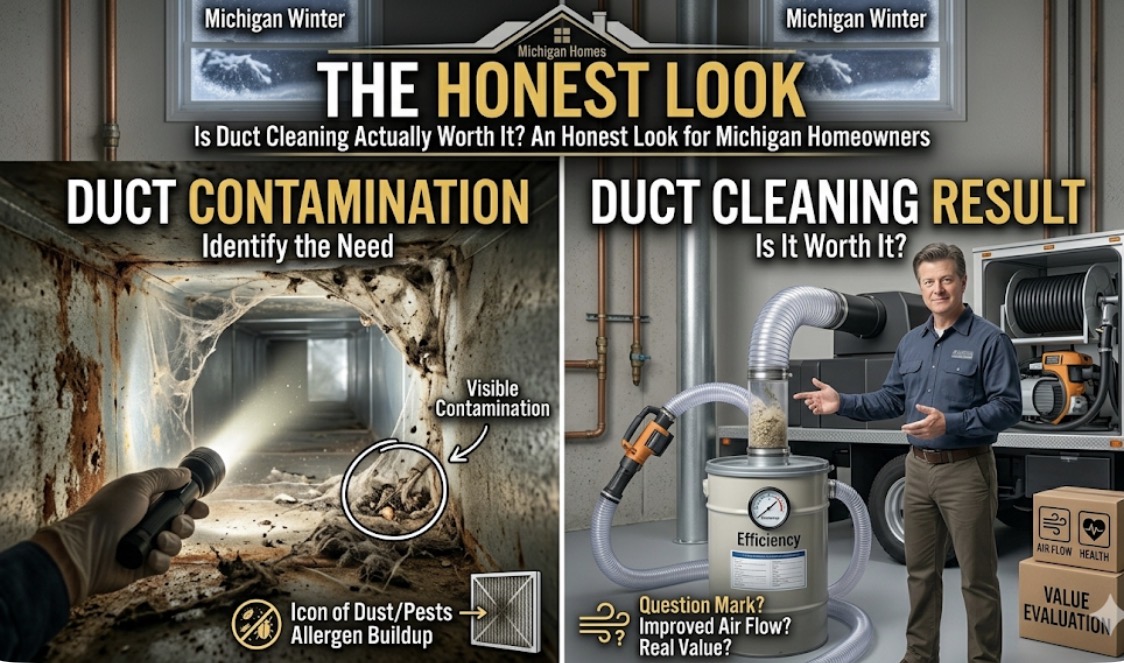
You've probably seen the ads: duct cleaning for $49, or a whole-house special for $99. And you've probably wondered whether it's a legitimate service or mostly a sales tactic. The honest answer is: it depends and that 'it depends' is worth understanding in detail before you spend any money.
Duct cleaning is one of those services where both extremes of the debate are wrong. The people who say it's always necessary and dramatically improves air quality are overstating the evidence. The people who say it's always a scam and never does anything useful are also wrong. The reality is more nuanced, and knowing where your specific situation lands makes all the difference.
What's Actually in Your Ductwork
Your duct system is a network of metal or flexible conduit that runs through your walls, floors, and ceilings, distributing conditioned air from your HVAC equipment to every room in the house. Over time, these ducts accumulate dust, debris, and other material how much depends on factors like the age of your home, how well your air filter has been maintained, whether you've had any construction or renovation work done, and whether pets are part of the household.
In most homes with a properly maintained HVAC system and regular filter changes, the amount of debris in the ductwork is relatively modest. Dust settles on the duct surfaces but doesn't necessarily become airborne in significant quantities during normal operation. This is why the EPA's position on duct cleaning is measured: they don't recommend it as a routine maintenance measure, but they do acknowledge that it's appropriate in specific circumstances.
When Duct Cleaning Is Genuinely Useful
There are situations where professional duct cleaning provides clear, demonstrable benefit:
After Construction or Major Renovation
This is the most clear-cut case. Drywall dust, sawdust, insulation fibers, and construction debris that gets into an open duct system during renovation work can circulate through your home for months. If you've had significant renovation work done especially anything involving cutting walls, replacing insulation, or work near duct openings cleaning the ducts afterward is a reasonable step.
Visible Mold Growth Inside Ducts or on HVAC Components
If a technician or inspector confirms actual mold growth inside your ductwork or on the evaporator coil, cleaning is warranted. The important word here is 'confirms' mold should be visually documented, not just suspected based on a musty smell (which can have other causes). Note that cleaning alone isn't sufficient if there's a moisture problem driving the mold growth; the source of moisture needs to be identified and addressed.
Vermin Infestation
Evidence of rodents or insects in the ductwork droppings, nesting material, or actual animals is a legitimate reason to have the ducts cleaned and, more importantly, sealed. Duct cleaning in this case is part of a larger remediation that also needs to address entry points.
Substantial Visible Debris
If you remove a register cover and can see a significant buildup of debris beyond a light coating of dust matted pet hair, insulation fragments, visible dirt accumulation cleaning may be worthwhile. This is rare in homes with a functioning HVAC system and regular filter maintenance, but it does occur, particularly in older homes or properties that haven't been maintained consistently.
Moving Into a Home With Unknown History
If you've purchased an older home and have no information about when or whether the HVAC system has ever been serviced, a duct inspection (and potentially cleaning) as part of your overall HVAC assessment makes sense. You're not assuming there's a problem; you're establishing a baseline.
When Duct Cleaning Probably Isn't Necessary
For a well-maintained home with a regularly serviced HVAC system, annual or even biannual duct cleaning is almost certainly more than necessary. If your filters are changed on schedule, your HVAC equipment is maintained, and you're not seeing any of the red flags listed above, a light coating of dust in your ducts is normal and not a meaningful contributor to air quality issues.
The EPA notes that there is no evidence that routine duct cleaning prevents health problems or that dirty ducts (in the absence of mold, infestation, or heavy contamination) meaningfully affect indoor air quality. If you're looking to improve air quality, addressing filter quality, humidity control, or ventilation will generally have more impact than duct cleaning in a typical home.
The Low-Cost Duct Cleaning Offer: What's Actually Going On
This deserves specific attention because it's widespread enough to be a real consumer issue. The '$49 whole-house duct cleaning' offers you see advertised online, on flyers, on truck wraps almost universally follow the same pattern.
A technician arrives, does a cursory job that involves little more than vacuuming the accessible register openings, and then informs you that you need additional services mold treatment, sanitizer application, coil cleaning that weren't included in the advertised price. The final bill is often several times the original offer.
A legitimate professional duct cleaning job takes two to four hours for an average-sized home and requires specific equipment: a truck-mounted or portable high-powered vacuum unit and agitation tools (rotating brushes or air whips) that dislodge debris from duct surfaces. It's not cheap, professional duct cleaning typically runs $300–$600 or more for a full system — but it's done properly and doesn't involve upselling tactics.
If you're quoted something dramatically below this range, ask specifically what the service includes, what equipment is used, and how long the job will take. The answers will tell you a lot.
What a Proper Duct Cleaning Involves
When duct cleaning is warranted and you're getting it done right, here's what the process should look like:
• A pre-job inspection of the duct system, including checking for leaks, disconnected sections, or existing damage this matters because cleaning a duct system with significant leaks just recirculates debris into unconditioned spaces
• Protection of your home - registers and furniture covered, HVAC equipment protected
• Negative pressure created in the duct system using a high-powered vacuum unit, so that dislodged debris is captured rather than redistributed
• Mechanical agitation of duct surfaces using rotating brushes or compressed air tools to loosen debris the vacuum alone can't capture
• Cleaning of supply and return ducts, registers, grilles, diffusers, and accessible HVAC components (evaporator coil access panels, drain pan, air handler interior)
• A post-cleaning inspection to confirm results
Duct Sealing: Often More Valuable Than Cleaning
One service that doesn't get enough attention relative to duct cleaning is duct sealing. The U.S. Department of Energy estimates that the average American home loses 20–30% of conditioned air through duct leaks - gaps, disconnected sections, and poorly sealed joints that allow heated or cooled air to escape into unconditioned spaces like attics, crawl spaces, and wall cavities.
That's not a small number. In a Michigan home running the furnace for six months of the year, a 25% duct leakage rate means roughly a quarter of your heating costs are warming your attic instead of your living room.
Duct sealing using mastic sealant or metal-backed tape applied by a technician to accessible joints and connections can meaningfully reduce energy waste, improve system performance, and lower monthly bills. It's often a better use of money than cleaning in homes that don't have the specific contamination issues described above.
The Practical Takeaway
Duct cleaning is a legitimate service that's genuinely useful in specific situations and not particularly necessary in others. The key is knowing which situation you're in before spending money.
If you're unsure, the right starting point is an HVAC inspection not a duct cleaning quote. A technician who looks at your whole system, checks your filter history, inspects accessible duct sections, and looks at overall system performance can tell you honestly whether cleaning is warranted. That's a much better foundation for a decision than responding to a discounted offer.
And if cleaning is recommended, make sure the service is being done with proper equipment by a company that can explain exactly what the job involves and how long it will take. The difference between a legitimate duct cleaning service and a cursory job with an upsell attached is significant - both in terms of what you pay and what you actually get.